A TOOL For schools, OTs, and therapy spaces
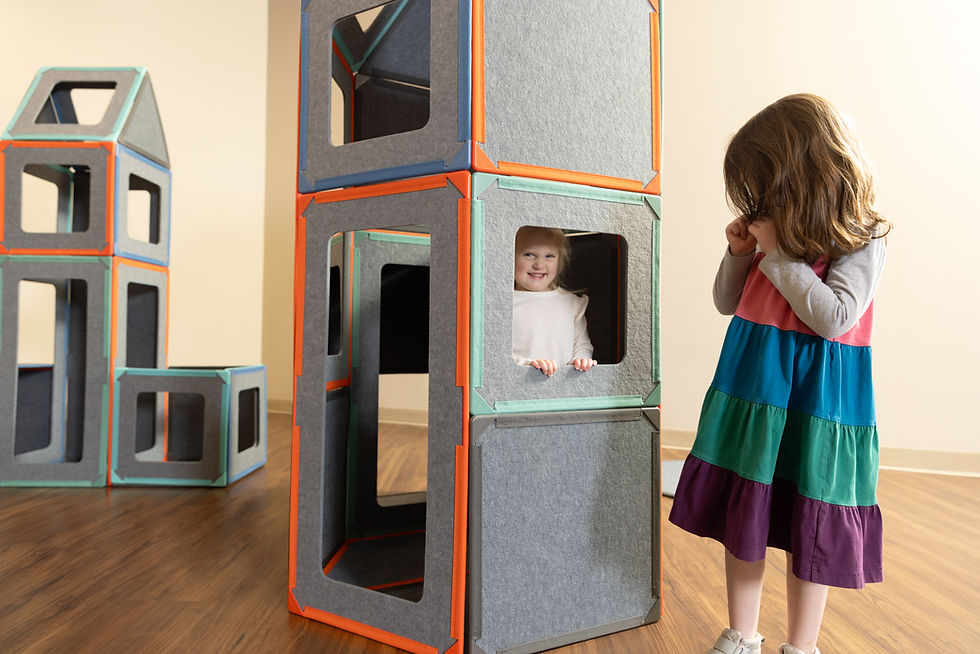
Life-sized magnetic panels that can do anything. From building sensory zones, reading nooks, storyboards, to STEM challenges, curriculum standards aligned lesson plans. One set transforms into whatever your classroom needs next.
One Learning tool.
Endless possibilities.
Open-ended play 🎨 STEM learning 🔬 Low-sensory zones 🌙 Storyboards 📚 Physical activity 🤸 Building confidence 💪 Calm-down corners 🌿 Reading nooks 📖 Gross-motor play 🏃 Imaginative play ✨ Group collaboration 🤝 Sensory regulation 🌊 Indoor recess ⚽ STEAM challenges 🧪 Therapy spaces 💚 Quiet zones 🤫
The best value in Education
Buy once.
Use everywhere. Retain more.
One purchase. Every classroom in the building. Endless ways to use it. Pair Superspace with our free curriculum-aligned lesson library and watch test scores climb, because kids retain what their hands and bodies are engaged in. A meta-analysis of nearly 400 K-12 studies found that hands-on, active learning significantly outperforms teacher-led instruction on both achievement and retention.
Award-winning designs that grab attention
Open Ended Play
The American Academy of Pediatrics calls open-ended play "essential" for building the executive function skills kids need to learn.
Hands on STEM
University of Chicago research shows kids understand STEM concepts better when "the body becomes part of the learning process."
Vertical Surfaces
Research on embodied cognition finds that movement-based learning creates "stronger, more durable memories" than seated, tabletop work.
Low Sensory Spaces
Pediatric OTs find a calming sensory space helps overwhelmed students "regroup, self-regulate, and recover their ability to focus" before returning to learning.
Literacy Storyboards
A landmark Nesbit & Adesope meta-analysis found that when students actively construct a story map, the comprehension boost is more than double what they get from passively viewing one.
Cozy Reading Nook
Foundational literacy research found students who read 40 minutes a day score in the 90th percentile on standardized tests. Those who read just 2 minutes? The 10th.
Dramatic Play
Decades of early childhood research show dramatic play builds the language, self-regulation, and social-emotional skills NAEYC identifies as the three pillars of kindergarten readiness.
Collaborative Problem Solving
A 2023 meta-analysis of 36 studies found that collaborative problem-solving produces "large gains" in critical thinking, one of the strongest effects measured in education research.
Multi - Use Functionality
With the ESSER funding cliff behind them and budgets projected flat through 2027 (McKinsey, 2025), district purchasers are quietly walking away from single-purpose classroom products that earn back only one line item.
Featured in
WHY IT WORKS
Click-and-build simple.
Patented auto-aligning magnets mean kindergartners can build independently. No instructions, no frustration.
Built classroom-tough.
Premium eco-felt construction made with recycled plastic bottles, designed to hold up to daily classroom use.
Stores flat.
Panels slide into a closet, under a bookshelf or in its carrying case box. Easy clean up when class is over.
Educator Testimonials
Check out dozens of lesson plans and more in our Resource Library
Nature-Inspired Design for Cosmic
Education
NGSS 1-LS1-1 — Use materials to design a solution to a human problem by mimicking how plants and/or animals use their external parts to help them survive, grow, and meet their needs.
NGSS 2-LS4-1 — Make observations of plants and animals to compare the diversity of life in
different habitats.
CCSS.ELA-LITERACY.SL.1.1 — Participate in collaborative conversations with diverse partners about grade 1 topics and texts with peers and adults in small and larger groups.
Grade Level: 1st – 2nd Grade (Ages 6–9)
Duration: 2–3 hours (can span multiple sessions)
Subject: Science / Geography / Art / Montessori Cosmic Education
Students explore Earth's ecosystems through the Montessori Cosmic Education lens, building life-sized rainforest, desert, and ocean environments with Superspace panels and natural materials while developing scientific observation, ecological understanding, and collaborative communication skills.
Sequencing in Montessori Build Work
References AMS curriculum areas for Early Childhood (ages 2.5–6).
AMS Practical Life: Multi-step sequential tasks develop order, concentration, and executive function.
AMS Cognitive Development: Planning, sequencing, and problem-solving through hands-on work.
AMS Social Development: Collaborative communication and cooperative group work.
Grade Level: Pre-K – Kindergarten
Duration: 30–45 minutes
Subject: Practical Life / STEM / Executive Function /ELA
Pre-K and Kindergarten students plan, build, and reflect on multi-step Superspace structures, developing
sequencing skills, executive function, and collaborative communication through a Montessori-inspired
engineering approach.
Screens off. Hands on.
Long live building in the classroom.
Shop Educator Bundles




Subscribe to our monthly newsletter
A new lesson plan every month, plus early access to new challenges and educator-only discounts.
Direct to your inbox.
Shop All Sets
Explore research backed Bblogs


Get in touch!
Reach out any way that works for you. Submit a question through the form below, email or call from our business card, or pick a time on the calendar to talk it through.